
How making art helps us process grief
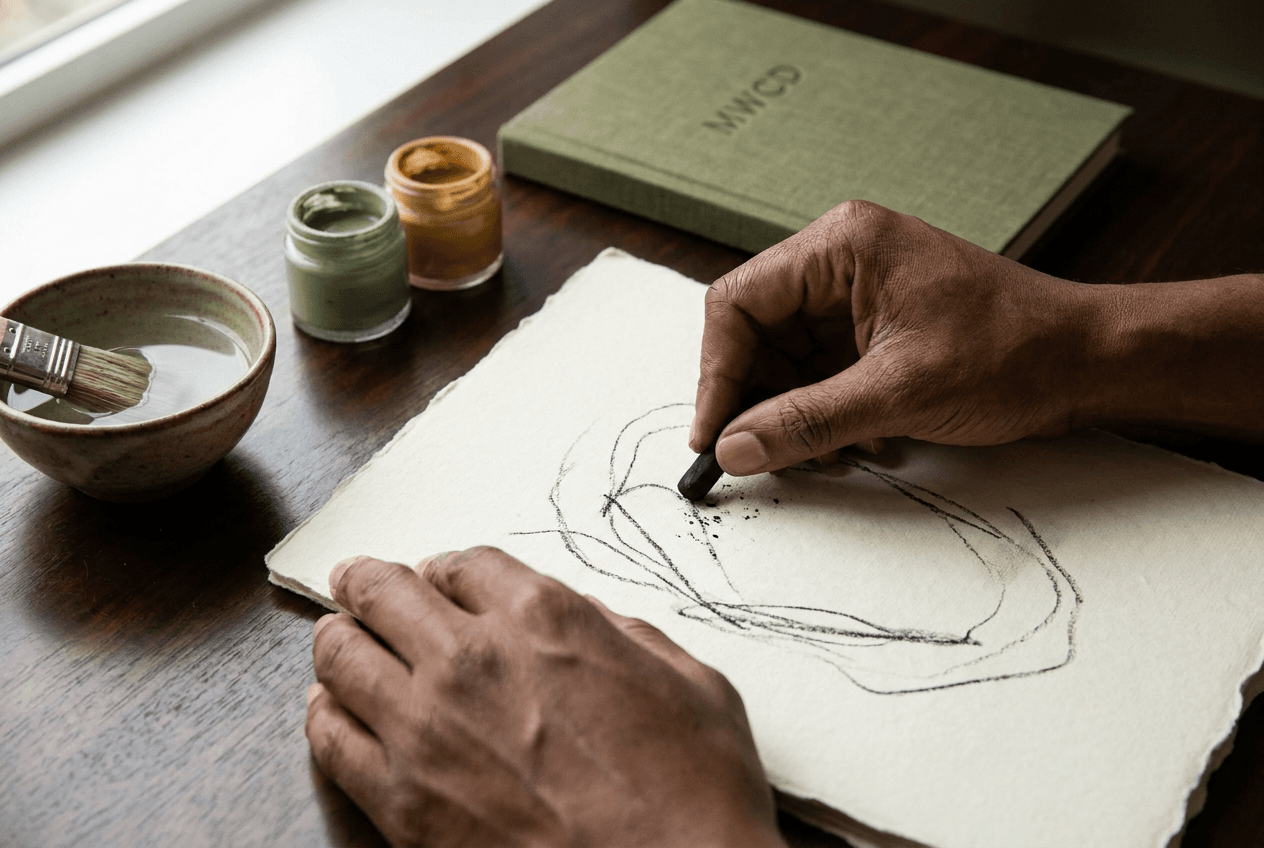
Ask someone to describe their grief and you'll often get silence, or a sentence that trails off. Hand that same person a piece of clay, or a brush, and something different tends to happen. Not always a breakthrough, sometimes just a shape, a colour, a mark repeated until it feels finished. But something moves.
In our Creative Connect Africa sessions focused on loss, we don't ask participants to explain their work. That's a deliberate choice. The moment art becomes something you have to justify in words, it starts operating under the same pressure as talking about grief directly, and for a lot of people, that pressure is exactly what kept the grief locked in place to begin with.
What we see instead is process doing the work that explanation can't. Someone reworking the same motif across several sessions. Someone choosing colours that, without ever being named, clearly track a mood shifting week to week. A facilitator's job in these sessions is less about teaching technique and more about holding space, staying present without steering.
We're careful not to overstate this. Creative expression isn't a substitute for grief counselling when that's what's needed, and we make sure participants know both are available. But for many people, especially in contexts where talking openly about loss carries stigma, a wordless practice is often the first door that opens. Everything else can follow from there.